Want Something Different? Do Something Different

If you want something different,
You must do something different.
Hope is not a strategy.
I want you to think about that statement as I share this essay. I’ll say it again: If you want something different, you must do something different. Because as much as we’d like it to be, hope is not a strategy.
For the bulk of my career as a consulting analyst to the telecom and tech industries, I often led executives through the reinvention of their organizations, competitive positioning efforts, marketing strategies, and technology development programs by relying on a process that I called “Reverse-Engineering the Future.” Those opening lines capture the essence of the exercise: If you want a different outcome, don’t expect it from your business-as-usual, status quo-driven efforts. There’s a word for that. It’s called insanity.
That’s only half of the equation, though. Instead of taking stock of the present state of things and then extrapolating toward a (usually) vague future, the approach most organizations take and the approach that almost always fails, Reverse-Engineering the Future begins in the future with a clearly-defined end-state and then reverse-engineers back to the present. Why? Because it forces participants to let go of the way things currently are as they envision a detailed and realistic future for themselves.
The process works. After running hundreds of diverse organizations through various forms of successful reinvention, I went on to complete a doctorate program during which I studied the reverse-engineering process in depth and wrote a book about it, called Reverse-Engineering the Future: A Prescription for Change Leadership.
And now? I’m tired of standing on the sidelines and keeping my mouth shut. It’s time to apply Reverse-Engineering the Future to American politics.
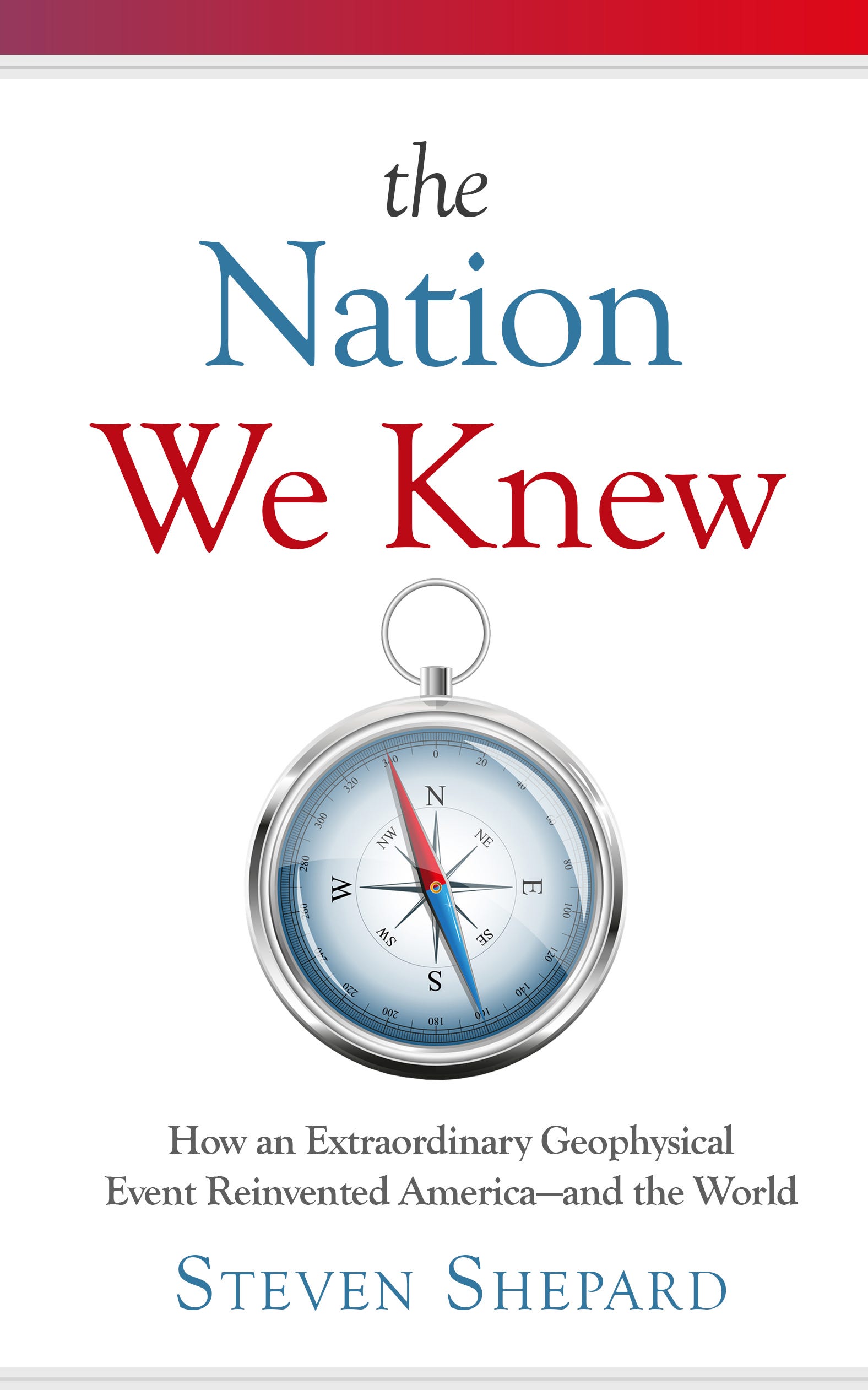
Just before COVID descended on us, I published a book, a novel, called “The Nation We Knew.” The story for it had been stewing in my brain for more than a decade, and when it finally came together, I wrote the book in about a month and got it published. It instantly became an international bestseller, rising to the number one position in political fiction globally on Amazon for several weeks.
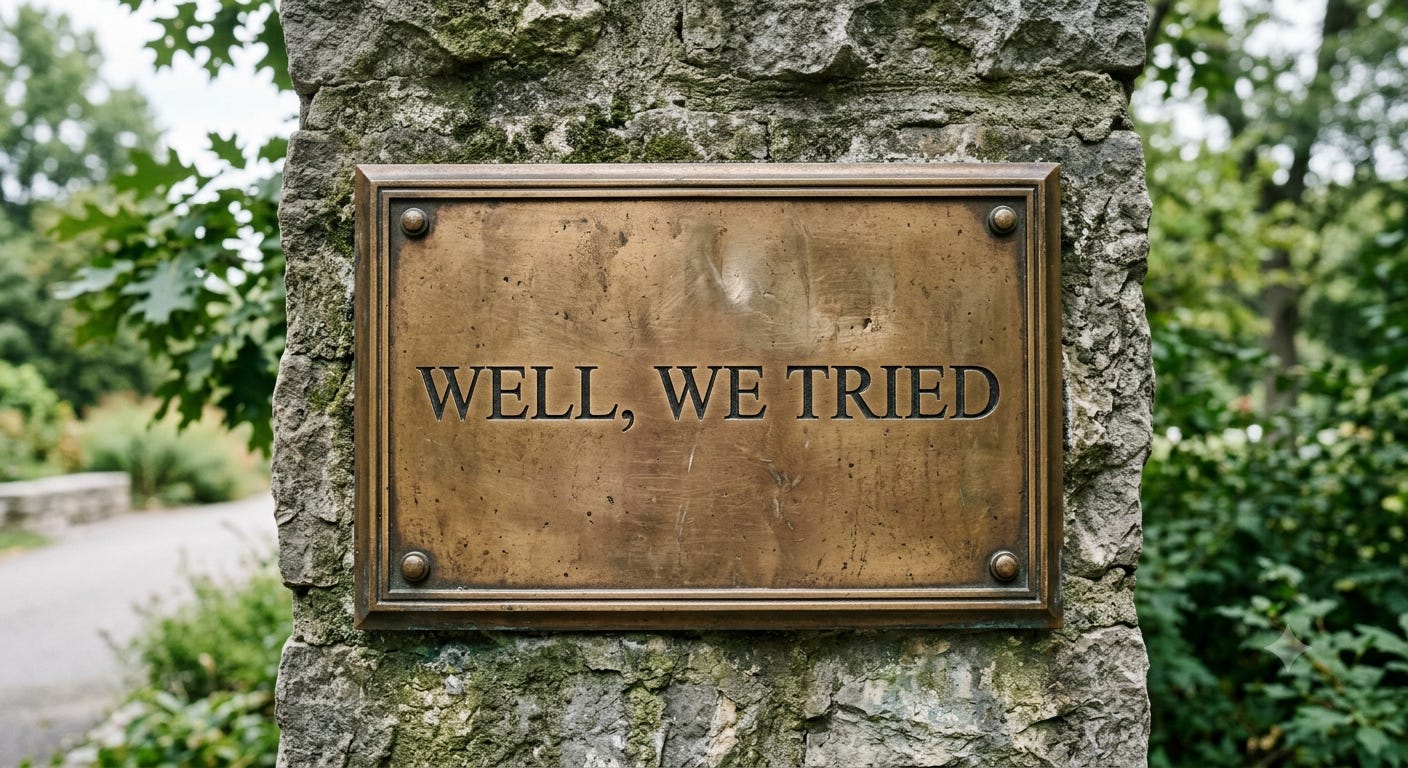
Reverse-Engineering the Future requires participants to let go of the present—the way things are, the status quo—as an inviolable prerequisite for building the future they want to create. Why? Because the one sure thing that fails every time—EVERY time—is when the group decides that they’re going to fix the current broken process as their mechanism for achieving the future they want. The process fails because the first thing that happens is that they run into the impenetrable barrier of ‘Well, that’s nice, but that’s not how we do things here.’ Inertia kicks in, the culture brakes go on, and everything comes to an abrupt and ignoble end. ‘Well, we tried,’ gets engraved on the plaque that memorializes the attempt.
So: instead of trying to fix the broken present, an approach that rarely, if ever, works, participants create the future they want to inhabit, with as much detail as they can possibly and realistically include. They’re required to ignore the present, because to pay attention to how things are done today rewards the status quo. Why would you reward the status quo, when that’s what you’re trying to leave behind?
A day doesn’t go by—and hasn’t since 2016–that the word ‘polarized’ doesn’t appear somewhere on the front page of every newspaper or newsfeed in the country. The nation is culturally and politically polarized, which means that something has been driven into the ground that creates two very different groups of people, separated by the vastness of—what, exactly? Ideology? Beliefs? Class differences? Economic disparity? I don’t think so. In fact, I don’t believe the country is divided because of the presence of something.
I believe the nation is divided because of the absence of something.
In 2016, Trump and MAGA came rolling into office on a platform of change. Never mind the incalculable toll their actions have since taken on education, science, international affairs, medicine, and the economic and cultural enrichment brought about by long-standing immigration practices. They promised widespread change, and they delivered it. Like it or not, they painted a picture of a different future, and people rallied because it was different. Not necessarily better, just different. They reinvented the status quo.
On the other side of the aisle, when Kamala Harris was asked what she would change about Joe Biden’s approach if she were to become president, her response was, “Absolutely nothing.” That response doomed her chances. Why? Because it told the voting public on both sides of the aisle that the status quo should be rewarded, that good enough is good enough. And it gave Republicans a reason to vote Republican, and gave Democrats a reason to not vote Democrat—and in many cases to not vote at all.
Today, the Democratic party’s message—if there is one—is “Oh, you think we’re bad? Well, maybe, but we’re not as bad as the Republicans.” Yes, you are. Through your inaction, through your failure to provide a vision of a desirable future under your guidance and leadership, you are every bit as corrosive as Trump and his MAGA sycophants.
In my book, The Nation We Knew, a new president is elected, a dark horse candidate who reinvents the nation in extraordinary ways by using the Reverse-Engineering process to envision a desirable future for the entire country and by building a Cabinet made up of experts in their respective fields. She makes it very clear, political appointees need not apply. You want to be the Education Secretary? Then you damn well better know your way around a classroom and you better know something about administering an educational institution.
Keep in mind that The Nation We Knew is a novel. But make no mistake: As I wrote it, as I considered every sacred cow (otherwise known as a status quo) that this president intended to gore, I did my homework. This may be the first novel in history that comes with extensive footnotes—dozens and dozens of them. But most of them say the same thing: “It’s true, look it up.” In other words, do your own homework—I did. Thousands of hours of research went into the creation of the book, and the result is a vision of this country that is pretty astounding—and possible.
In his book, “Nobody in Charge,” Harlan Cleveland wrote that “It’s only by using your imagination that you can escape the thinking person’s most dangerous mindset: To consider only those futures that can be readily extrapolated from where we are today.” When organizations base their vision of a desired future on how things are currently done, two things happen: They reward the status quo, and they cripple the possibility of a different future.
So, the president in my novel decides to toss the status quo under the bus and reinvent things in a way that creates jobs, changes tax structures, radically reforms the corrections system, changes how education does its thing in the modern era, invents a fully funded, universally available healthcare system that actually works, and slaps government up side the head to knock some sense into it. There’s no magic involved in her approach: all she does—and yes, this president is an African-American woman—is work with her government peers, the nation’s citizens, and her well-informed, skilled and capable Cabinet members, to create a vision of the future of the United States that is so motivating, so compelling, so powerfully real, that everyone steps up to help make it happen. It’s desirable, and they all want to be part of it.
This country is now 250 years old. It has flourished under its form of government and its well-considered Constitution from infancy. The only other country that has done that is San Marino. Go look it up—it’s true. We must be doing something right. The United States has survived a civil war, two world wars, numerous ill-considered conflicts, countless recessions, a global depression, at least two major pandemics, and the gigantic, tangled, mess-of-a-hairball that its own government has become. But it will go on, and it will be strong.
A few minutes ago I said that the nation is polarized, not because of the presence of something, but because of the absence of something. That ‘something’ is a singular vision for the future of the United States of America that transcends political dogma and the stuff of petty disagreement. It was first captured in the opening paragraph of the Declaration of Independence, the document that signed the nation into existence.
Do you know what the opposite of ‘polarized’ is? It’s ‘unified.’ As in, ‘United States of America.’ As in, ‘We the People.’ As in, ‘a more perfect union.’ As in, ‘Indivisible.’
If you want something different, you have to do something different. Hope is not a strategy.
Republicans, Democrats, and everything in between, I hereby put you on notice: Show us something different. Paint us a picture of a more desirable future, a future that we, the people, all of us, long for. The first party that does that will be the party that carries the nation forward as a unified entity, the “shining city on the hill” that we, one nation, indivisible, with liberty and justice for all, were once proud to be.
We’re waiting. But the clock’s ticking.
I’m looking forward to reading this, Steve. I ended up buying the hardcopy and it just came in. We do indeed need a new way of thinking. Happy 4th.